
Gold & Silver Tax Reporting Guide 2026 | IRS-Proof Stack
Navigate the 28% precious metals tax in 2026. Learn IRS-compliant cost-basis tracking for gold & silver to protect yourself during audits.
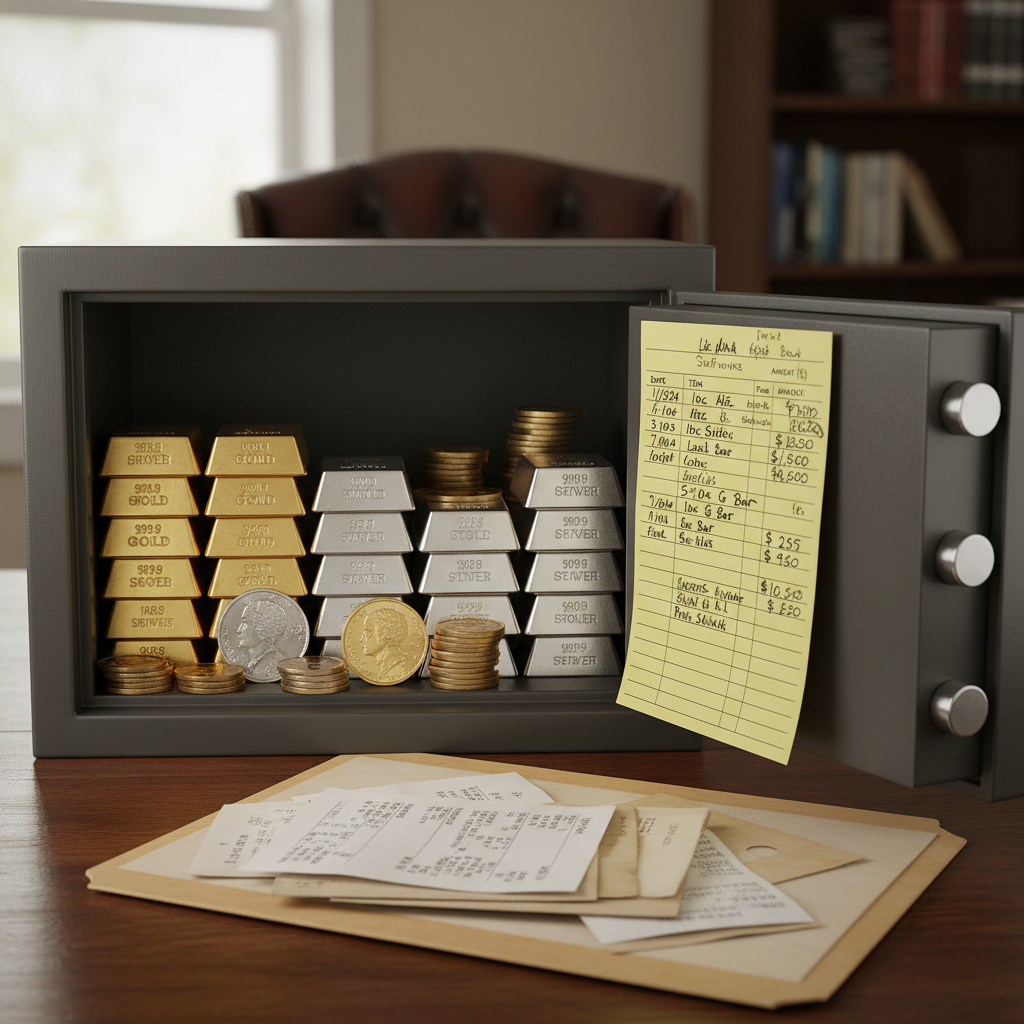
The 28% Precious Metals Tax Rule: How Cost-Basis Tracking Protects You During an IRS Audit
When you sell physical gold, silver, or other precious metals, the IRS doesn’t treat your gains like stock profits. Physical bullion, coins, and other precious metals are classified as “collectibles” for tax purposes, subjecting long-term capital gains to a maximum rate of 28%—substantially higher than the 15% or 20% rate applied to most other long-term investments. (IRS)
This tax treatment creates a documentation challenge that many precious metals investors underestimate: proving your cost basis during an audit.
Understanding the Collectibles Tax Rate
The IRS distinguishes between two types of capital gains based on holding period:
Short-term capital gains apply to assets held for one year or less and are taxed as ordinary income at your marginal tax rate. (IRS)
Long-term capital gains apply to assets held for more than one year. For most investments, this means preferential rates of 0%, 15%, or 20% depending on income. But precious metals fall under collectibles, which face a maximum long-term rate of 28%. (IRS)
Consider the impact: If you’re in the 24% tax bracket and sell stocks held for over a year, you’ll likely pay 15% on gains. Sell gold coins held for the same period, and you could pay 28%.
The Receipt Fatigue Problem
Here’s where cost-basis tracking becomes critical.
When you sell precious metals, your capital gain is calculated as the sale price minus your cost basis—what you originally paid for the metal, including premiums and fees. During an audit, the IRS requires documentation proving that cost basis.
For investors who accumulate precious metals over years or decades through multiple purchases, this creates what we call “Receipt Fatigue”: the overwhelming burden of locating, organizing, and presenting dozens or hundreds of purchase records during an audit.
Missing receipts mean the IRS may assume a cost basis of zero, taxing your entire sale proceeds as gains—a potentially devastating outcome.
Reporting Requirements Add Complexity
Certain precious metals transactions trigger additional reporting requirements that make accurate record-keeping essential.
Dealers may file Form 1099-B to report proceeds from sales of certain commodities, including specific types and quantities of precious metals. (IRS)
Additionally, dealers must file Form 8300 for cash payments exceeding $10,000 received in a single transaction or related transactions. (IRS)
These forms create a paper trail that the IRS can cross-reference. If your reported cost basis doesn’t align with documented purchase history, it raises audit flags.
Special Considerations for IRA-Held Precious Metals
Not all precious metals investments face the 28% collectibles rate. Certain gold, silver, platinum, and palladium products that meet specific purity requirements qualify for inclusion in Individual Retirement Arrangements (IRAs). (IRS)
IRA-held precious metals follow standard IRA distribution and taxation rules rather than collectibles treatment. However, this requires proper custodial documentation proving the metals meet IRS standards—another layer of record-keeping that compounds during an audit.
How Automated Cost-Basis Tracking Eliminates Receipt Fatigue
Modern solutions address this documentation burden through automated cost-basis tracking systems designed specifically for precious metals investors.
These platforms capture purchase data at the point of transaction—price, premiums, fees, dates, and product specifications—creating a permanent, organized record. When you sell years later, the system instantly generates the documentation needed to prove your cost basis.
During an audit, instead of scrambling through filing cabinets or email archives searching for decade-old receipts, you provide a comprehensive, time-stamped record of every acquisition. This eliminates Receipt Fatigue and the risk of claiming an unsupportable cost basis.
The system serves a defensive function: protecting you against the worst-case scenario where lost documentation leads to artificially inflated tax liability.
The Stakes of Poor Record-Keeping
The 28% collectibles rate already creates a higher tax burden than most investments. Compounding that with lost documentation that forces you to accept a reduced cost basis—or face penalties for unsupported claims—transforms a manageable tax situation into a financial crisis.
An audit doesn’t announce itself years in advance. By the time you receive notice, your ability to reconstruct purchase records from closed businesses, expired email accounts, or misplaced paperwork may be severely limited.
Automated tracking systems eliminate this vulnerability by maintaining continuous, accessible documentation from the moment of purchase.
Building an Audit-Proof Record
Precious metals investors face higher tax rates and more complex reporting requirements than most asset classes. The collectibles tax rate makes every dollar of cost basis valuable, and IRS reporting requirements create multiple verification points that demand accurate record-keeping.
Automated cost-basis tracking transforms this challenge from a compliance burden into a resolved issue. By capturing and organizing purchase data systematically, these tools ensure that when an audit comes—or when you simply need to file an accurate return after a sale—you have the documentation to support every claim you make.
The goal isn’t just tax compliance. It’s protecting the value of your investment by ensuring you can prove what you paid, avoiding inflated tax bills that result from poor documentation rather than actual gains.